Brad Hodge Powerful Legacy Shines Despite Missed Opportunities
The inspiring journey of a respected Australian cricketer

Introduction
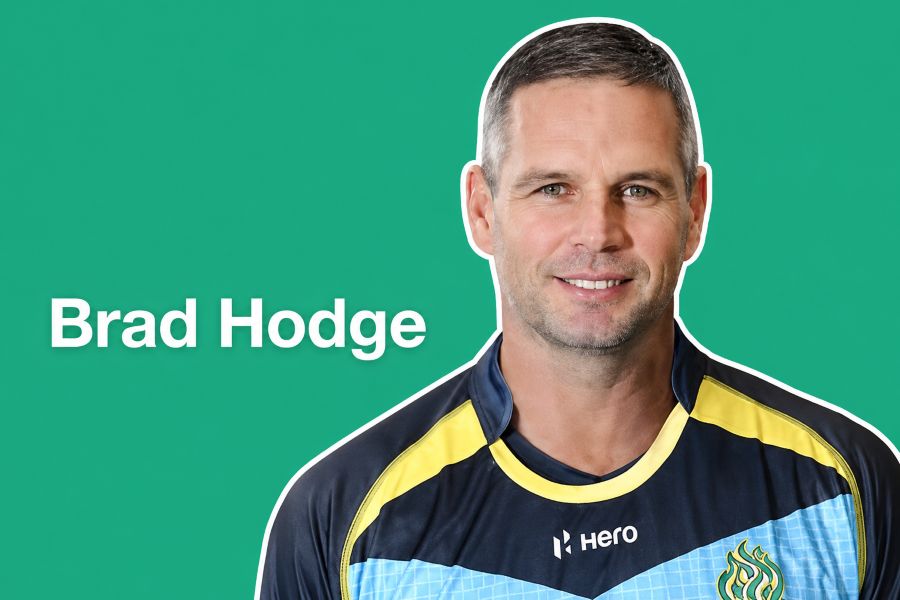
Brad Hodge is one of the most respected names in Australian domestic cricket. Known officially as Bradley John Hodge, he built a powerful reputation as a dependable batter, smart cricket thinker, and long-serving performer across domestic, international, county, IPL, BBL, and global T20 cricket. His career is often remembered with both admiration and debate because he achieved outstanding numbers but did not receive as many international opportunities as many fans believed he deserved.
Table of Contents
ToggleAs an Australian cricketer, he became famous for his right-handed batting, calm temperament, and ability to score runs in different formats. His journey includes a famous Test double century, World Cup squad success, years of domestic dominance, and later work in coaching, commentary, and media. Away from cricket, he is also known as a family man, married to Meg / Megan Hodge, with children Jesse Hodge and Sophie Hodge.
Quick Bio
| Field | Details |
|---|---|
| Real Name | Bradley John Hodge |
| Known Name | Brad Hodge |
| Nickname | Dodgeball |
| Date of Birth | 29 December 1974 |
| Age | 51 years old |
| Birthplace | Sandringham, Victoria, Australia |
| Nationality | Australian |
| Profession | Former cricketer, coach, commentator, broadcaster |
| Height | 178 cm |
| Batting Style | Right-handed |
| Bowling Style | Right-arm off-break |
| Education | St Bede’s College, Mentone; Deakin University, Melbourne |
| Spouse | Meg / Megan Hodge |
| Children | Jesse Hodge and Sophie Hodge |
| @bradleyhodge302 |
Early Life and Education
Brad Hodge was born in Sandringham, Victoria, Australia, on 29 December 1974. His early life was closely connected with Australian cricket culture, especially in Victoria, where he later became one of the state’s most important batting figures. From a young age, he showed strong promise as a cricketer and developed the technique that later made him successful in first-class and limited-overs cricket.
He studied at St Bede’s College, Mentone, and his educational background also includes Deakin University, Melbourne. His school and university journey helped shape his discipline, while cricket became the main direction of his public life. His rise was not based on sudden fame but on years of consistent performance, patience, and strong domestic results.
Family and Personal Life
Brad Hodge is married to Meg / Megan Hodge. Publicly available information confirms that he and his wife have two children, Jesse Hodge and Sophie Hodge. He has generally kept his family life private, which is why his public image remains focused mostly on cricket, coaching, and broadcasting rather than personal publicity.
His family background is presented carefully because unavailable or unverified details should not be added. What is clearly known is that he has balanced a long sporting career with family responsibilities. His personal life reflects a private and stable side of a sportsman who spent many years travelling, competing, and working in high-pressure cricket environments.
Career Beginning
Brad Hodge began his senior domestic career with Victoria in the 1993/94 season. This was the start of a long journey that would make him one of the most productive domestic batters in Australia. He also represented Australia Under-19s before becoming a regular senior professional, showing that his cricketing ability was recognized from an early stage.
His career start was built on consistency rather than hype. He had to earn his place through repeated performances in domestic cricket. Over time, he became known for his ability to occupy the crease, score big runs, and adapt to changing match situations. These qualities later helped him succeed in both longer formats and fast-moving T20 cricket.
Domestic Cricket Career
Brad Hodge’s domestic career is the strongest part of his cricket story. He played many seasons for Victoria and became one of the state’s most important run-scorers. His first-class record shows his quality clearly, with more than 17,000 first-class runs and 51 centuries. These numbers place him among the most accomplished Australian domestic batters of his generation.
He also played county cricket in England for teams including Durham, Leicestershire, and Lancashire. His county experience added depth to his career because English conditions often test a batter’s technique and patience. He performed across different countries, pitches, and formats, proving that his batting was not limited to one environment.
International Cricket Career
Brad Hodge played for Australia in Test cricket, One Day Internationals, and T20 Internationals. His international career began in 2005, and although it was shorter than his domestic record suggested it might be, he still made a strong impact. In Test cricket, he scored 503 runs in 6 matches at an average above 55, which is a remarkable figure for any batter.
His most famous international innings was 203 not out against South Africa. That double century remains one of the defining moments of his career. Despite that achievement, he did not become a long-term regular in the Australian Test side, mainly because he played during a period when Australia had many world-class batting options.
ODI and T20 Career
In ODI cricket, Brad Hodge played 25 matches for Australia and scored 575 runs. He also made a World Cup century, scoring 123 against the Netherlands during Australia’s 2007 Cricket World Cup campaign. Being part of Australia’s 2007 World Cup-winning squad remains an important achievement in his career.
In T20 cricket, he became even more widely known. He played for Australia in T20 Internationals and later built a major reputation in franchise cricket. His calm batting, smart shot selection, and experience made him valuable in T20 leagues, where teams needed mature players who could handle pressure.
Franchise and T20 League Career
Brad Hodge played for several franchise teams, including Kolkata Knight Riders, Kochi Tuskers Kerala, Rajasthan Royals, Melbourne Renegades, Melbourne Stars, Adelaide Strikers, Guyana Amazon Warriors, Peshawar Zalmi, and St Kitts and Nevis Patriots. His long presence in T20 cricket showed his ability to remain useful even as the game became faster and more aggressive.
His IPL and BBL careers helped introduce him to a global audience. He was not only a run-scorer but also a senior figure in dressing rooms. Younger players could learn from his experience, and teams benefited from his knowledge of match situations, batting plans, and professional preparation.
Career Stats
| Format | Matches | Runs | Highest Score | Average | 100s | 50s |
|---|---|---|---|---|---|---|
| Test | 6 | 503 | 203* | 55.88 | 1 | 2 |
| ODI | 25 | 575 | 123 | 30.26 | 1 | 3 |
| T20I | 15 | 183 | 36 | 26.14 | 0 | 0 |
| First-Class | 223 | 17,084 | 302* | 48.81 | 51 | 64 |
| List A | 251 | 9,127 | 164 | 43.25 | 29 | 38 |
| T20 Overall | 277 | 7,405 | 106 | 36.84 | 2 | 48 |
| IPL | 66 | 1,400 | 73 | 33.33 | 0 | 6 |
| BBL | 50 | 1,412 | 88 | 42.78 | 0 | 11 |
Career Timeline
| Year / Period | Event |
|---|---|
| 1974 | Born in Sandringham, Victoria, Australia |
| 1992/93 | Represented Australia Under-19s |
| 1993/94 | Began senior career with Victoria |
| 2002 | Played for Durham |
| 2003–2004 | Played for Leicestershire |
| 2005 | Made international debut for Australia |
| 2005 | Scored 203 not out against South Africa |
| 2005–2008 | Played Test cricket for Australia |
| 2007 | Part of Australia’s World Cup-winning squad |
| 2008–2010 | Played for Kolkata Knight Riders |
| 2011 | Played for Kochi Tuskers Kerala |
| 2012–2014 | Played for Rajasthan Royals |
| 2014 | Played his final T20I for Australia |
| 2018 | Retired from playing cricket |
| After 2018 | Continued in coaching, commentary, and media roles |
Coaching and Commentary Career
After retiring as a player, Brad Hodge moved into coaching, commentary, and media work. He served in coaching roles with franchise teams, including Kings XI Punjab and Gujarat Lions. His experience as a player gave him the ability to understand batting pressure, dressing-room culture, and T20 strategy.
He also became involved in broadcasting and commentary. His cricket knowledge made him a useful voice for explaining batting, match tactics, and player mindset. His public Instagram handle, @bradleyhodge302, also reflects his ongoing connection with cricket, broadcasting, coaching, and public appearances.
Source of Income
Brad Hodge’s known income sources come from professional cricket, domestic contracts, T20 franchise leagues, coaching roles, broadcasting, commentary, speaking appearances, and media work. His long career across multiple cricket formats gave him several professional paths after retirement.
There is no verified public net worth or exact salary figure available from authoritative sources, so those details should not be added. A responsible biography should only include confirmed income sources rather than guessing financial numbers.
Health and Retirement
Brad Hodge retired from playing cricket in 2018. One of the reported reasons connected to the end of his playing career was health trouble related to appendicitis and complications. This affected his final playing period and helped push him toward retirement and future coaching roles.
His retirement did not remove him from cricket. Instead, it allowed him to shift into mentoring, coaching, commentary, and media. He remained connected to the game through knowledge, experience, and professional relationships built across many years.
Complete Career Overview
Brad Hodge’s career is powerful because it shows both success and frustration. On the positive side, he scored thousands of runs, produced a Test double century, played in a World Cup-winning era, and became one of the leading Australian domestic batters. On the negative side, many fans believe his international career was too short for a player with his talent and statistics.
His story is especially important for understanding how difficult Australian selection was during his era. Even excellent players could miss out because the national team was filled with elite names. Still, he built a legacy through domestic dominance, T20 success, coaching, and commentary.
Legacy
Brad Hodge is remembered as an Australian cricketer whose numbers speak strongly. His first-class record, Test average, T20 success, and famous double century all show that he was a high-quality batter. He may not have played as many international matches as expected, but his cricket story remains respected.
His legacy is also about resilience. He kept performing even when selection did not always go his way. He later used his knowledge to help other players through coaching and media. For many cricket followers, Bradley John Hodge represents talent, patience, professionalism, and one of Australian cricket’s great “what if” stories.
Conclusion
Brad Hodge built a meaningful cricket career through consistency, skill, and determination. From Victoria to Australia, from county cricket to the IPL and BBL, he proved himself across formats and conditions. His career had both powerful achievements and missed opportunities, which makes his story even more memorable.
Today, he remains respected as a former player, coach, broadcaster, and cricket personality. With a strong family life alongside Meg / Megan Hodge, and children Jesse Hodge and Sophie Hodge, his journey shows the full picture of a cricketer who gave much to the game and continues to hold a respected place in Australian cricket history.
FAQ
Who is Brad Hodge?
He is a former Australian cricketer, coach, commentator, and broadcaster.
What is his real name?
He is officially named Bradley John Hodge.
How old is he?
He is 51 years old.
Where was he born?
He was born in Sandringham, Victoria, Australia.
Who is his wife?
She is known as Meg or Megan Hodge.
Does he have children?
He has two children, Jesse Hodge and Sophie Hodge.
What is his Instagram handle?
He uses the public Instagram handle @bradleyhodge302.
What was his most famous cricket innings?
He scored 203 not out against South Africa in Test cricket.
Why is his career often discussed?
He had outstanding domestic numbers but limited international opportunities.
What does he do after retirement?
He works in coaching, commentary, broadcasting, and public speaking.